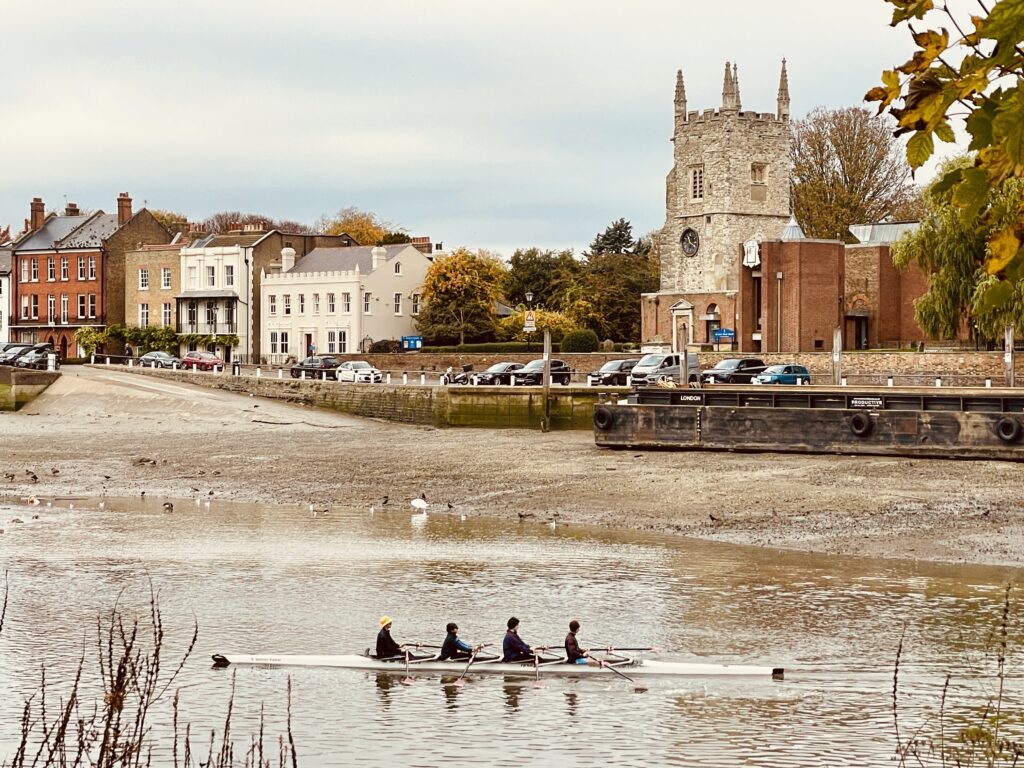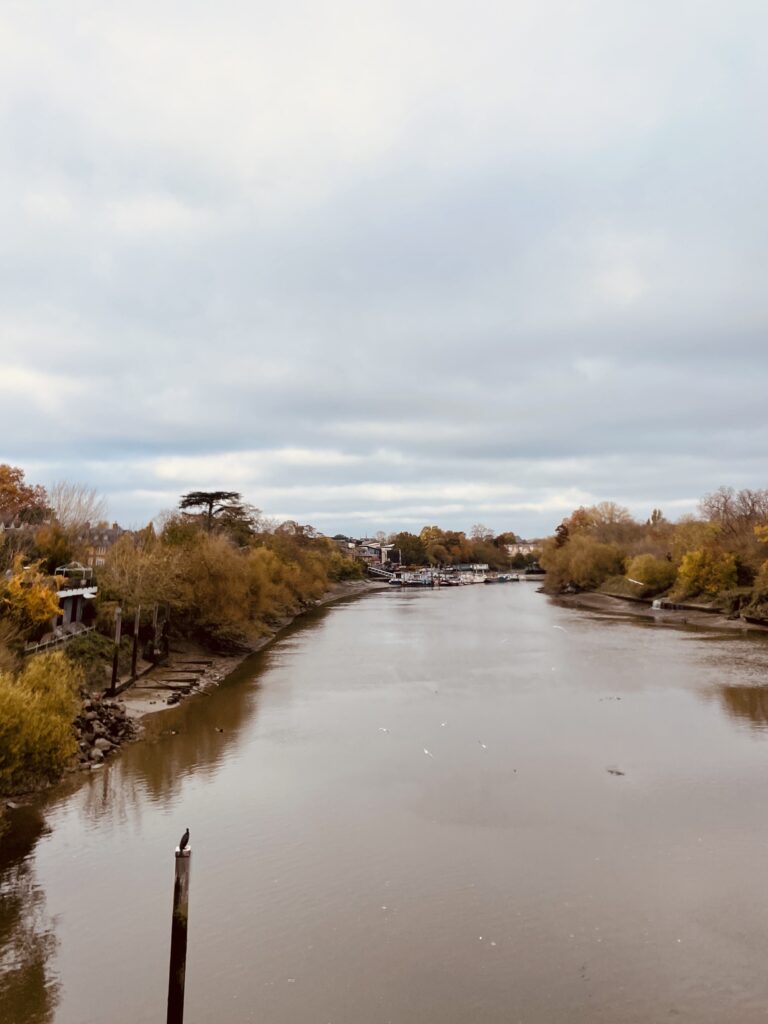
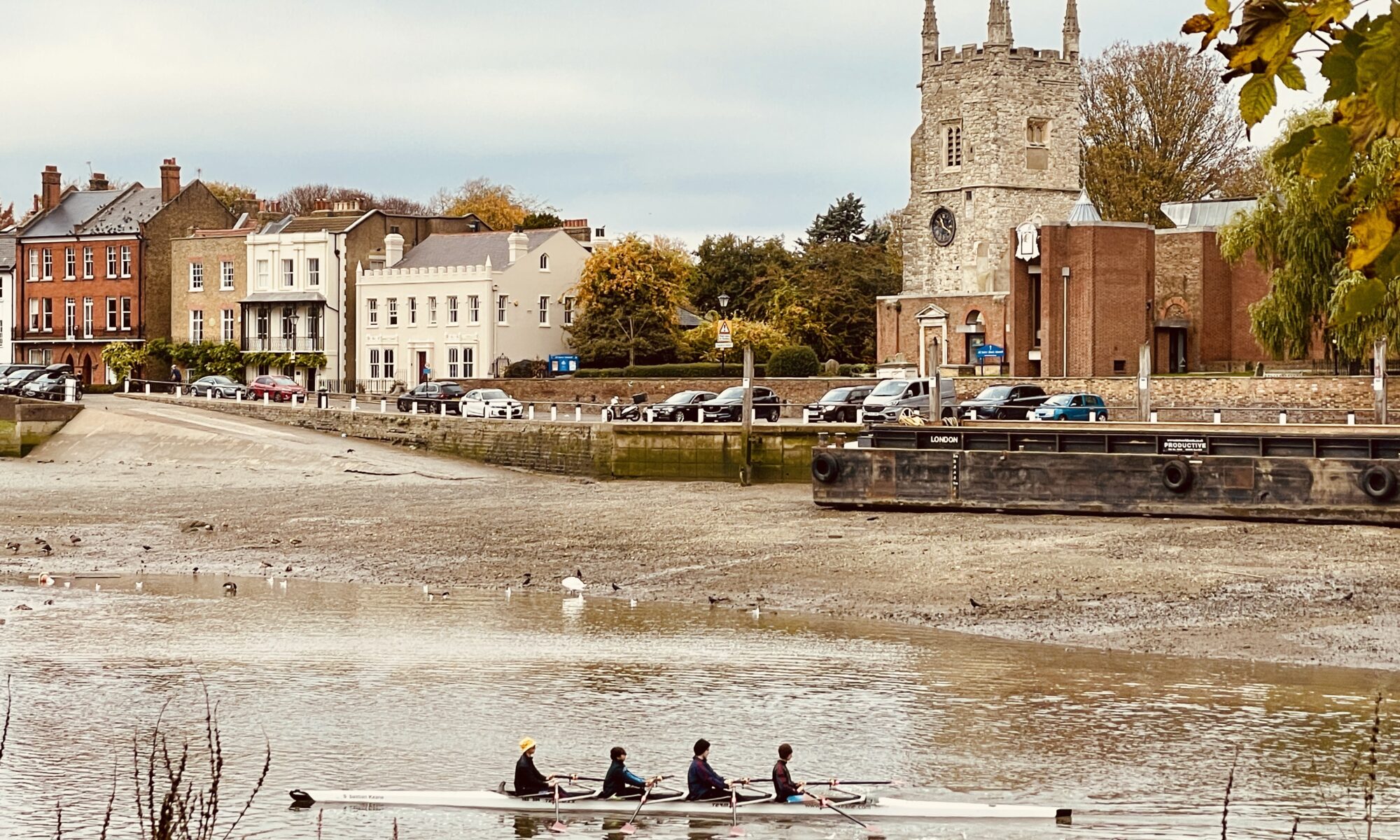
Falling into the Thames today would be difficult — after making a little flood, this flighty lady has gone to enjoy herself elsewhere. The muddy riverbed, exposed by the low tide, lay in sharp contrast to the incongruous whiteness of the (always) royal swans and the dark silhouettes of cormorants. Some of them are local, as there is a population living here all year round, while others rest on their way farther south. To me, the angular big birds sitting on river piles resemble monks, but Linnaeus named them Phalacrocorax carbo, meaning carbon-black bald ravens. Also true, but they are probably a bit larger than those. Nevertheless, I slipped — but into history. Sunday morning gives some room to this temptation.
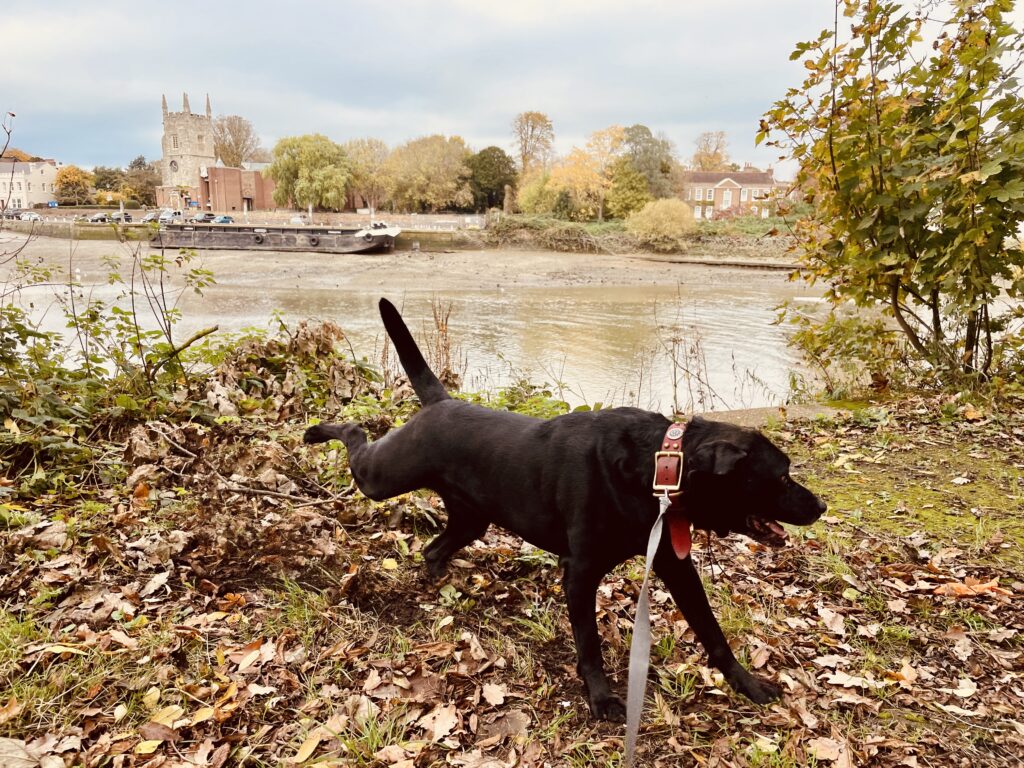
The short tower of All Saints’ in Isleworth, gazing across the river at the Royal Observatory in Richmond’s old deer park, looks as if built in Minecraft but it doesn’t know about this momentary similarity. I bet it rather feels like a needle stitching millennia together. The story of this parish reaches back beyond the Domesday Book, that thousand-year-old inventory of his trophies by William the Conqueror. This thousand-year-old book, by the way, rests just a walk from here in the National Archives at Kew.
However, the tower is much younger, it is just medieval, some early 1400s. There are very few riverside churches that survived industrialization. All Saints’ was stubborn probably because it watched a lot: the heavy royal traffic up and down, —Windsor, Hampton Court, Richmond, Westminster, – the ancient river highway worked 24/7, not like the modern district line. Katherine Howard was arrested near here and left sailing down on her final journey to the Tower of London, where she was relieved from her head. Anna Boleynas well. The tower saw Henry VIII many times, but it also witnessed his coffin after it paused at nearby Syon on the way to Windsor, where it famously swelled and burst. Quite unpleasant and maybe even fictional, but so much like Henry VIII. The website of this church says that “it also saw the embarkation” of an unfortunate seventeen-year-old girl, Lady Jane Grey, departing for her nine-day queenship and also death. I doubt it. Syon House is a few hundred meters downstream. Why would they go up the river? …Before the modern rowers, the river was very busy: Tudors, Charles I and II with the Civil War and Cromwell in between (Oliver’s Ait is right behind the turn of the river), luxurious barges of Elizabeth I, Kew-loving Hanoverians, and other royals, up to the first steam engines forcing Queen Victoria and Prince Albert to their summer palaces. That time, way before the Great Stink, the river was full of fish. Isleworth, Brentford, and Richmond sent eels, vegetables, cattle, willow baskets and many other goods to London, all by river, as muddy roads rarely were an option. The tower of All Saints’ endured the Reformation, wars of the twentieth century, a fire, and a particularly spiteful act of arson in 1943, when two local boys, finding no money in the church, decided to burn it instead. That time, southern England was in blackout and bombs, so the flames of All Saints’ were seen from far across the Thames.
…although the Thames is away, the rowers still try to follow what remains of the fairway, though at any moment they look in danger of running aground. The view is a timeline. What is the time?